Recent Posts
Iran's Tanker Strikes Hit a Wartime High on the Omani Side of Hormuz, Aimed at Ships on Its Non-Compliance List
The week of September 28 to October 5 was the worst for tankers in the Strait of Hormuz since the war began on February 28. Tracking sources counted at least 12 attacks on oil, LPG and LNG carriers in those seven days. The IMO, which is slower to verify, had confirmed nine. The previous worst week, in mid-July, had eight.
Where the ships were hit matters more than how many. Almost every strike in that stretch landed in the southern channel, a few miles off Oman’s coast. That is the lane shipowners moved to in June, when Muscat’s corridor offered a way past Iran’s tolled northern route. It was supposed to be the workaround. Iran is now treating it as a firing range.
Hormuz Transit Counts: US Claims 40 Ships a Day, Kpler and Lloyd's List See About 12
Six months into the war, nobody can agree on how many ships are getting through the Strait of Hormuz. Washington says traffic is climbing and the lanes are clear. Tehran says the strait is shut to anyone it hasn’t approved. The commercial trackers, the ones insurers and oil desks pay for, land a lot closer to Tehran’s picture.
The gap is wide. On 1 September two US officials said 40 commercial ships had crossed under naval escort carrying roughly 18 million barrels of oil, a wartime record. Kpler counted 11 vessels that day.
Iran Escalates Against the US to Break a Hormuz Stalemate Its Economy Can't Outlast
Six months into the war, the Strait of Hormuz has settled into a shape that suits Washington better than Tehran. The US Navy blockade keeps most Iranian oil off the water, while American escorts push a thin stream of tankers through the strait at great expense. There have been no formal talks for months. Iran’s leadership has looked at that picture and decided to change it by force.
The past ten days show how. A monthlong lull ended when US aircraft hit Iranian rocket launchers on an island in the strait, saying they were being readied to fire mines into the shipping lanes. Iran answered with missiles at US bases in Jordan. Then it took the fight to sea. Overnight into September 9 the US said one of its warships had evaded an Iranian ballistic missile attack, and that it destroyed five Iranian tankers in the Gulf of Oman and near Kharg Island in response. Tehran fired around 20 missiles at the Al-Azraq air base in Jordan, went after US Navy ships and claimed hits on 10 merchant vessels near the strait. By its own count that was the heaviest day of attacks on shipping since the war began. A Greek-owned tanker carrying about two million barrels of Iraqi fuel oil caught fire; a cargo ship was struck off Iraq’s al-Faw peninsula; another vessel was seen listing at anchor off Dubai.
Iran's Rial Passes 2.2 Million to the Dollar as Oil Export Revenue Falls to Zero
The open-market dollar traded at about 2.24 million rials in Tehran on 7 September, after touching 2.30 million during the previous session. That is a rise of roughly 6 percent in a week and about 44 percent over six months. The Central Bank continues to quote something near 1.5 million, a rate almost nobody outside the state apparatus can access. The gap between the two has more than doubled since February, which is the usual signal that a managed rate has stopped managing anything.
Trump Floats Renaming the Strait of Hormuz After Himself as Transits Fall to Eight Ships a Day
President Trump asked his followers on Wednesday whether the Strait of Hormuz should be renamed the Trump Strait. The reason he gave was ownership. “Now that we have it under U.S.A. control,” the post began, before promising the new name would be hotter than ever before, like America itself. Thank you for your attention to this matter.
The timing is the interesting part. He posted this the day after telling the same audience that the American position in the war is fine because Washington has almost total control of the strait. Almost. Three weeks earlier there was no qualifier at all, just total control and a naval blockade being called a wall of steel. The trophy is being engraved while the claim behind it is quietly shrinking.
US Strikes Larak Island as Iran Falls Back on the Jordan Escalation Pattern
American forces hit two Iranian rocket launchers on Larak Island on Sunday. CENTCOM said Revolutionary Guard crews had been observed getting ready to fire rockets carrying sea mines into the strait, and that the launchers were destroyed before they could shoot. Iranian state media reported dead and wounded. The Guards promised punishment for the aggressor. Brent for November went through $90 and WTI moved up near $86 as the news landed in a market that had spent most of last week pricing in a deal.
Trump Says He Will Declare the Strait of Hormuz US Territory. There Is No Mechanism to Do It
Speaking to a room of law enforcement officers in Garden City, New York on Friday, President Trump said that once the war with Iran is finished he will be “declaring the Hormuz Strait a territory of the United States.” Then he said the part that matters: “Essentially, that’s what it is. We have the blockade. No ships get through unless we want them to.”
That second sentence tells you what the first one is. This is not a legal claim being prepared somewhere in the State Department. It is a description of the blockade with a word attached to it that the blockade does not earn.
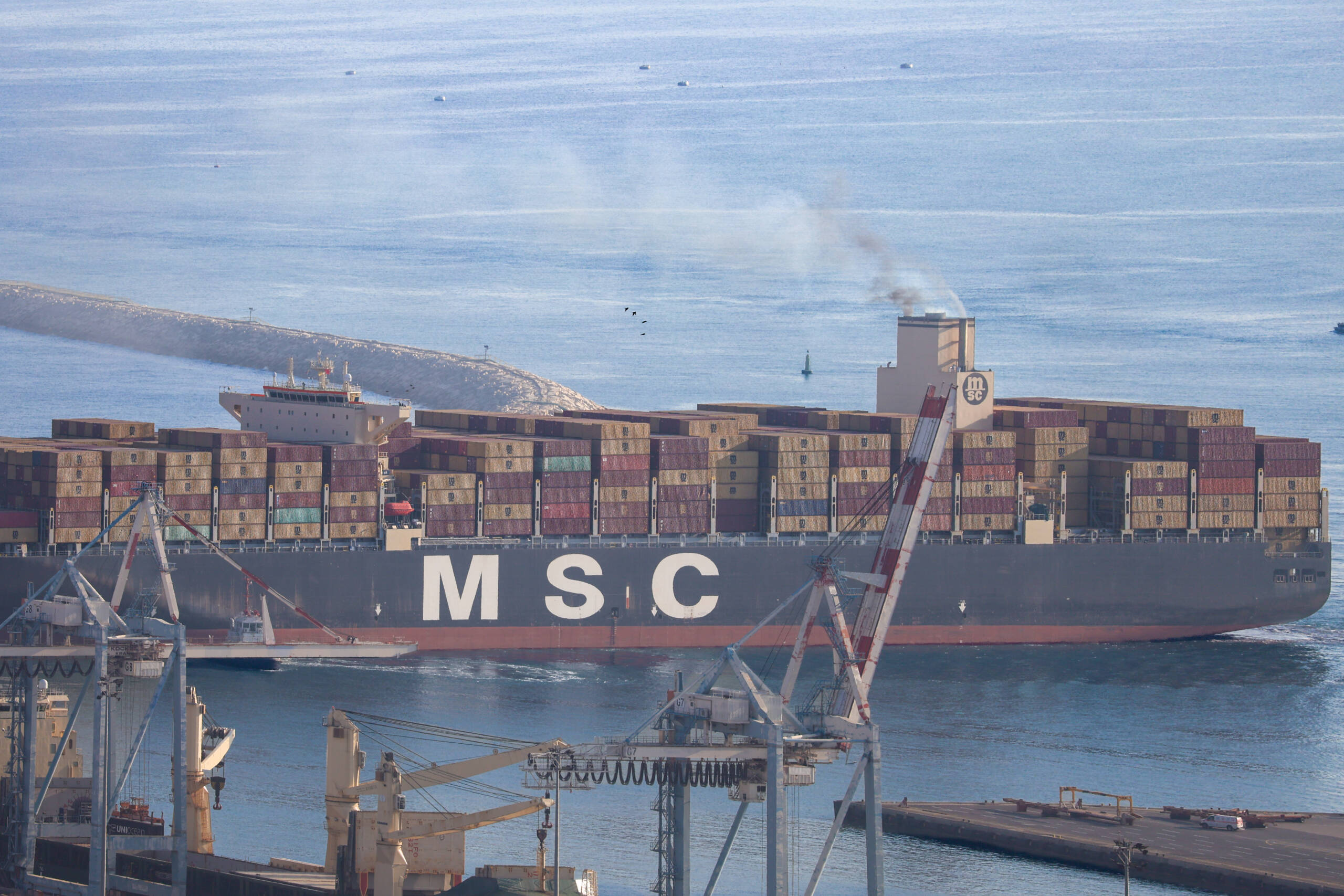
AI Vessel Screening Now Flags Sanctioned Tankers Before OFAC Does, but Hormuz Exposed the Limits
For most of the sanctions era, vessel screening worked backwards. A tanker moved sanctioned crude, an investigation followed, a designation eventually landed on an OFAC or EU list, and compliance teams updated their databases. The vessel by then had usually changed name, flag, MMSI and registered owner. The list described a ship that no longer existed in any operational sense.
Behavioural screening inverted that sequence. Instead of matching a hull against a list of designated names, the newer platforms score how a vessel acts: AIS gaps measured against expected satellite coverage rather than treated as raw outages, kinematically impossible position jumps that betray spoofing, loitering in known transfer zones, rendezvous patterns with other high-risk tonnage, flag histories that hop between registries with thin enforcement capacity. Windward, the largest of the vendors in this space, claims it flagged more than 99% of vessels sanctioned by the EU, UK and US during 2025 before those designations were published. Treat vendor self-scoring with the scepticism it deserves. The underlying shift is real regardless of whether the number survives independent audit.
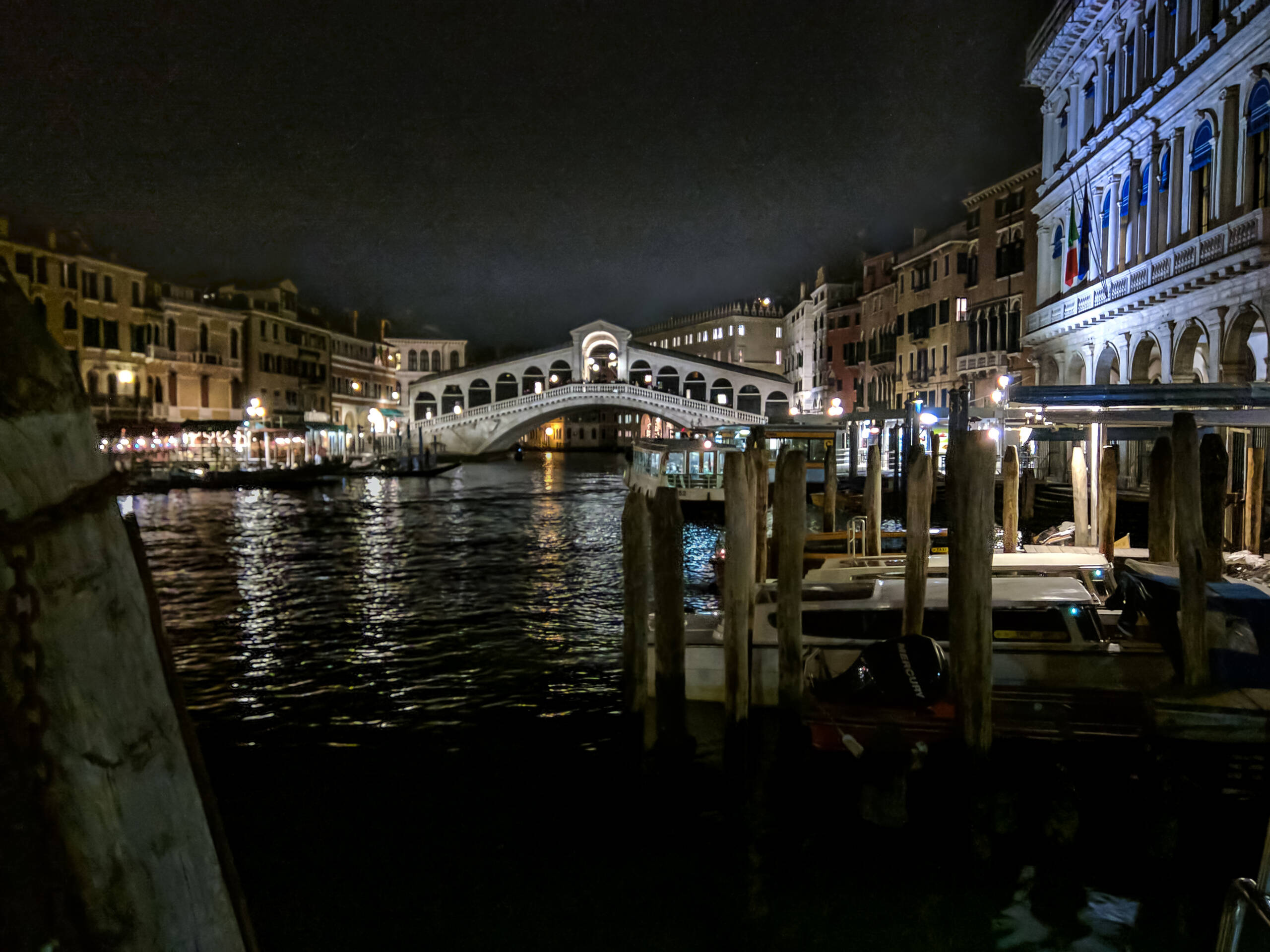
Venice Was the Original Chokepoint Power, and Its Collapse Is a Warning for Hormuz
The palaces on this stretch of water were paid for by a rent extracted from geography. Venice sat where the Levant trade entered Europe, taxed what passed, and converted the proceeds into a navy that protected the arrangement. For roughly four centuries this worked better than almost any other business model available to a European state. Then it stopped working, and the reasons it stopped are directly relevant to every state whose strategic position rests on a strait.
The US Munitions Shortage Is Why Iran Will Sign With Oman and Not With Washington
The Pentagon’s inventory problem stopped being a classified worry this week and became a published number. Roughly four fifths of the THAAD interceptor stock is gone against pre-war levels. About half the Patriot stock. Sources with access to the tallies say virtually the entire global holding of long-range precision strike missiles has been fired, along with nearly all the Army’s ATACMS and Precision Strike Missile rounds. Those are not marginal categories. They are the two things the United States needs to force a waterway open and then survive what comes back.